
What Doddridge County Property Tax Records Show
Doddridge County property tax records come from two sides of the same process. The Assessor keeps the property roll, tax maps, exemptions, classes, and yearly values. The bill itself follows a separate collection path. Search Doddridge County property tax records by address to see how a parcel is assessed, when values are reviewed, and who to call about an amount due. One caution is worth remembering. Assessment numbers follow a statewide rule, so they are not market prices. And because the review calendar shifts each year, a current Board notice is the best guide to deadlines.
| Field | What It Shows | Where |
|---|---|---|
| Assessed value | Taxable assessment after applying the 60 percent level to appraised value. | County Assessor / WV Property Assessment |
| Appraised value | True and actual value used in the state formula. | County Assessor |
| Property class | Class II, III, or IV according to use and municipal location. | County Assessor |
| Exemption record | The Assessor lists exemptions among its responsibilities; exact live fields were not captured. | County Assessor |
| Bill / payment status | Current amount due and payment lookup were not located in this sweep. | Contact county tax collection office |
| Delinquent land | State database and weekly viewer layer for delinquent parcels. | State Auditor / WV Property Viewer |
The Assessor's property records cover annual assessment work, tax maps, classification, and transfers. They also include new construction, exemptions, and sales-ratio analysis. Billing is a different track. The County Clerk's land index is not a bill ledger. Doddridge County publishes no current Sheriff tax-bill search online. The table below keeps the value side of property records separate from tax collection. It also sets apart delinquent-land information.
Annual Value Work in Doddridge County
Doddridge County's Assessor visits real estate at least once every three years. Values are updated annually on top of that. The office also handles ownership transfers, new construction, yearly land-value updates, exemptions, tax maps, and a sales-ratio analysis each year. A physical review and the annual assessment are two different things. A parcel can get a new value from the yearly work even if no in-person visit fell due that year.
Assessment information comes out once a year, the state says, when the new tax assessment is finished. A very recent ownership change may not show in the viewer right away because of that lag. For a fresh conveyance, a deed recorded with the County Clerk is the better record to check. On corrections, ask the Assessor directly about status. Don't guess how many months sit between a sale and a tax-roll update.
The county Assessor page lays out the calendar, the property classes, and the formula the office uses.
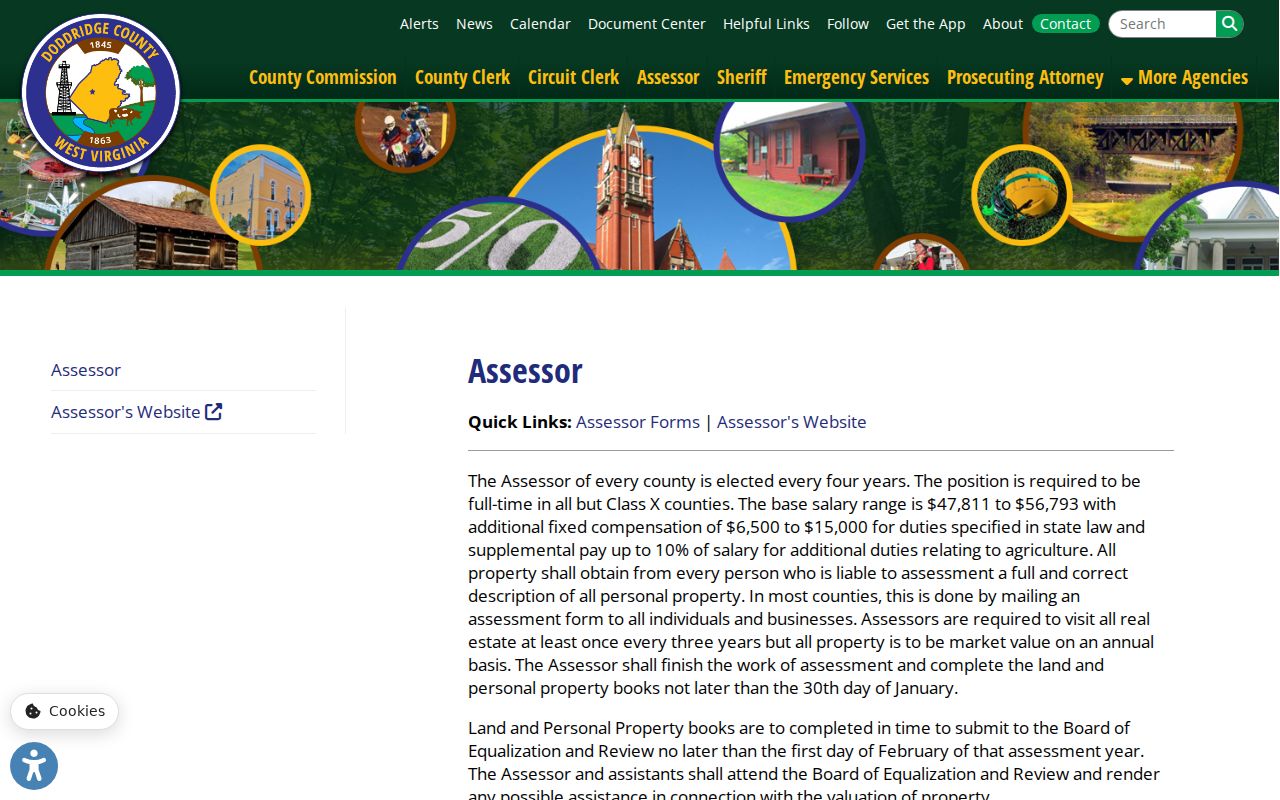
The county Assessor describes the rhythm plainly. Real estate gets an in-person visit at least once every three years. The value work itself happens annually. The yearly duties also include transfers. They cover new construction, land-value updates, exemptions, tax maps, and sales-ratio analysis. A visit cycle and a value cycle are not the same thing. A parcel can be updated through annual assessment work. That holds even in a year when no one walked the property.
The state releases assessment information once each year, when the new tax assessment is ready. A very recent ownership change can sit outside the viewer for a while because of that. For a fresh conveyance, a deed recorded with the County Clerk is the stronger record. Ask the Assessor directly about the status of a correction. Do not assume a fixed gap between a sale and a roll update.
The county Assessor page lays out the calendar, the property classes, and the valuation formula.
Class II, III, and IV Property in Doddridge
The annual schedule gives a value its context. It never establishes a current sale price.
When comparing one property record against another, the assessment year matters a great deal. Annual work can move values and land information. The Assessor schedules in-person visits only once every three years at most. Read a posted figure as that year's tax assessment. Do not take it as proof that an appraiser stepped inside the building. Suppose there has been new construction, a land-use change, a transfer, or an address correction. In that case, ask which part of the record changed. Ask what information the office relied on.
Looking Up a Doddridge Tax Bill
Start with the Assessor record to pin down the parcel. Then contact the county tax-collection office for the bill itself and the payment status. Doddridge County publishes no online bill portal. It also posts no local sale calendar, so the phone is the reliable route. One caution: the State Auditor's delinquent-land map is a separate database. It is not a source for the current amount due. Its viewer layer is updated weekly.
- Find the property in WV Property Assessment by its address, owner, or parcel clue.
- Write down the district, map/parcel label, owner name, and assessed value shown.
- Call the county tax-collection office to request the bill, balance, or payment route.
- Use the State Auditor database only to check its delinquent-land record, then confirm status with the county.
- Appraised value
- The Assessor's true and actual value starting point under state law.
- Assessed value
- Appraised value after the 60 percent assessment level is applied.
- Levy
- The rate applied to assessed value to calculate tax.
- Property class
- A category based on use and whether property is inside a municipality.
- Delinquent land
- Property recorded in the State Auditor's delinquent-land system; confirm status locally.
Official references for the valuation side are the annual assessment statute and the County Assessor's calendar. They cover valuation dates and review steps. They will not show a current account balance for any single parcel.
Doddridge County's February Review Window
Doddridge County runs its assessment calendar on a tight February schedule, and state law gives the Board of Equalization and Review its window. The Assessor completes the assessment books by January 30. They reach the Board by February 1. Review runs through February, and values are certified by March 3. The Board must adjourn by February's final day. The West Virginia review statute sets that timing.
Those milestones reward early attention from any owner of record. Read the current county notice first. It governs hearing scheduling and what evidence to bring. The Assessor or the Board can explain the steps that apply to your parcel. Keep the parcel district and the map or parcel number handy. That detail makes the value under review unambiguous. Do not wait for an online property card to change before asking about the Board process.
When a listed value looks wrong, collect the parcel number and the assessment record first. Then ask how to request review. No universal evidence checklist applies. Each county sets its own filing expectations, so the local notice controls. Ask which part of the valuation is challenged. A prior notice can still offer useful background. The Doddridge County notice itself dates from 2023, so treat it as historical context rather than a current deadline.
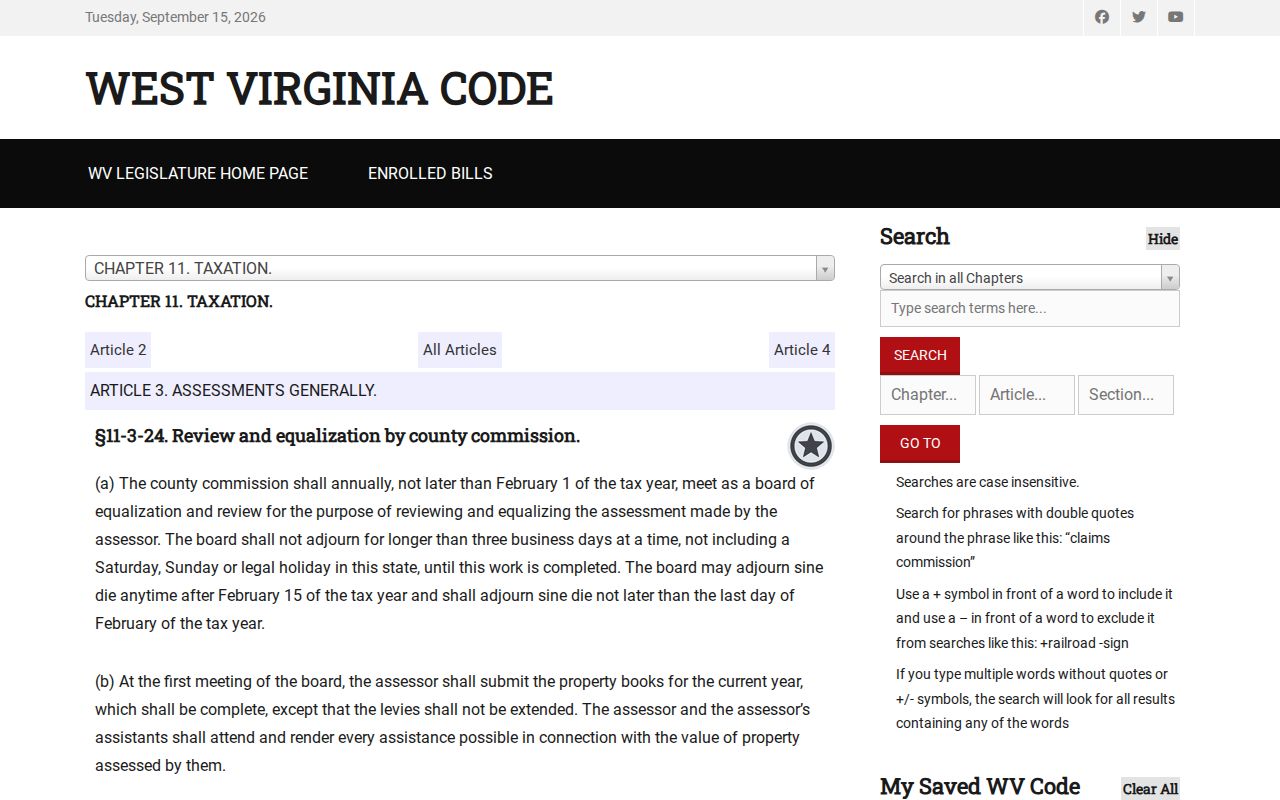
Check the county document center for the notice covering the current assessment year.
For a review conversation, keep the parcel ID, the assessment year, the property class, and the listed value together. Ask which part of the valuation is being challenged. Ask which office or Board process handles it. A prior year's PDF shows how the process has worked before. It cannot set this year's schedule alone. The official notice controls the appointment schedule and any submission rule. Confirm any required form with the Assessor's office.
Delinquent Land Is a Separate Doddridge Tax Record
Delinquent land leaves its own paper trail. The County Clerk records notices and deeds tied to delinquent-property redemption, while the State Auditor serves as Commissioner of Delinquent and Nonentered Lands and hosts a statewide database. WV Property Viewer adds a delinquent-land layer refreshed weekly, though an entry there does not mean the parcel is for sale, free of redemption rights, or clear of other claims.
Use the State Auditor's delinquent-land database as the official entry point. That state page lays out the search route. Compare any database record against the Clerk's filings before relying on it. Then ask the county about balance and redemption status. The county publishes no local tax-sale calendar or Sheriff bill lookup. Skip third-party summaries for payment details. Confirm methods with the office itself.
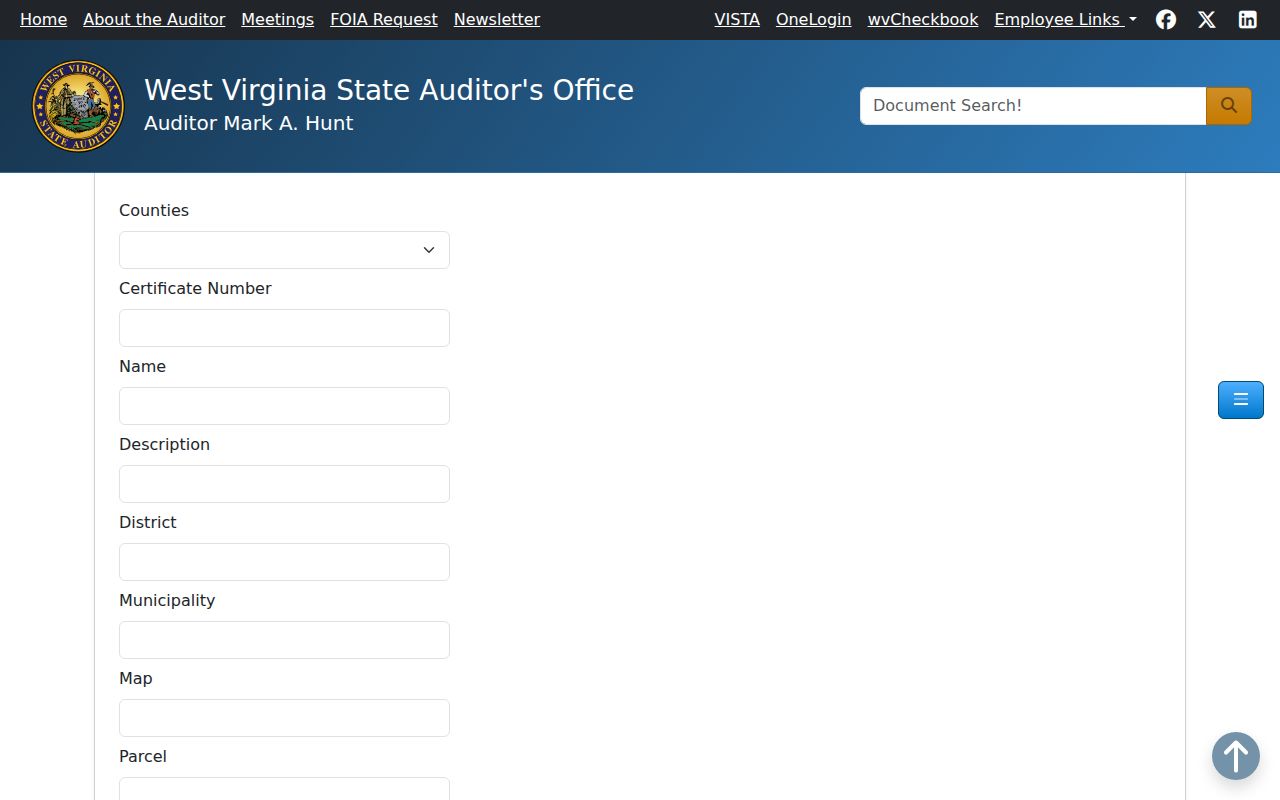
Confirm a parcel's tax status with the responsible office before any payment or purchase decision in Doddridge County.
Correcting a Doddridge Tax Mailing Address
A stray tax notice often traces back to an old mailing address. The Assessor supplies the address-change form. Its terms expect the requester to be the owner. It also accepts someone holding legal power of attorney. The office does not state how long a change takes. Nor does it say how the update appears in the statewide portal.
Keep situs and mailing details separate. Situs is where the parcel sits. The mailing address is where the tax bill goes. When a public record search shows one address that looks wrong, call the Assessor. Ask whether the record needs correcting. The staff can explain how to submit the form. A postal city label alone never proves the parcel lies inside that municipality.
Appealing a Doddridge County Assessment
Doddridge County's assessment books go to the Board of Equalization and Review by February 1. State law caps the session at February's end. That month is the annual window for contesting an assessment. The county publishes the current deadline notice. Read it early. The Assessor or the Board can spell out the filing steps that apply to your parcel.
Appeal window. The review takes place in February under the state schedule. Confirm the year's exact hearing dates and filing instructions with Doddridge County before preparing a request.