
The Doddridge County Owner of Record
Ownership data flows through two sources in Doddridge County. WV Property Assessment is the statewide route. Locally, the Doddridge Map Card Viewer opens first. You pick a district, then a map/parcel number, and a card loads with owner, mailing, situs, sale-date, and deed-reference fields. Not every field shows in every view.
| Owner field | Ownership data is part of the state system; exact local card label was not captured. |
|---|---|
| Vesting / entity | Read the grantee on the recorded deed; the card's vesting display is unverified. |
| Mailing address | May differ from situs; exact Doddridge card field was not captured. |
| Situs / parcel | Use the physical location and displayed parcel identifier to match the property. |
| Deed reference | Search County Records Inquiry by party, book/page, or instrument number. |
| Last transfer date | Confirm from the latest deed; no live card date was verified. |
An owner of record is whoever the official deed or property record names. The record names an owner, not an occupant. West Virginia redacts sensitive telephone and security-alarm details from its property data. A tax mailing address is only a contact point. It proves nothing about where the owner lives. The county publishes no detail on how a shielded address appears under West Virginia's Address Confidentiality Program. The Doddridge local Map Card Viewer screen offers District and Map/Parcel selectors plus a Show button. Its notice says card copies require an Assessor visit.
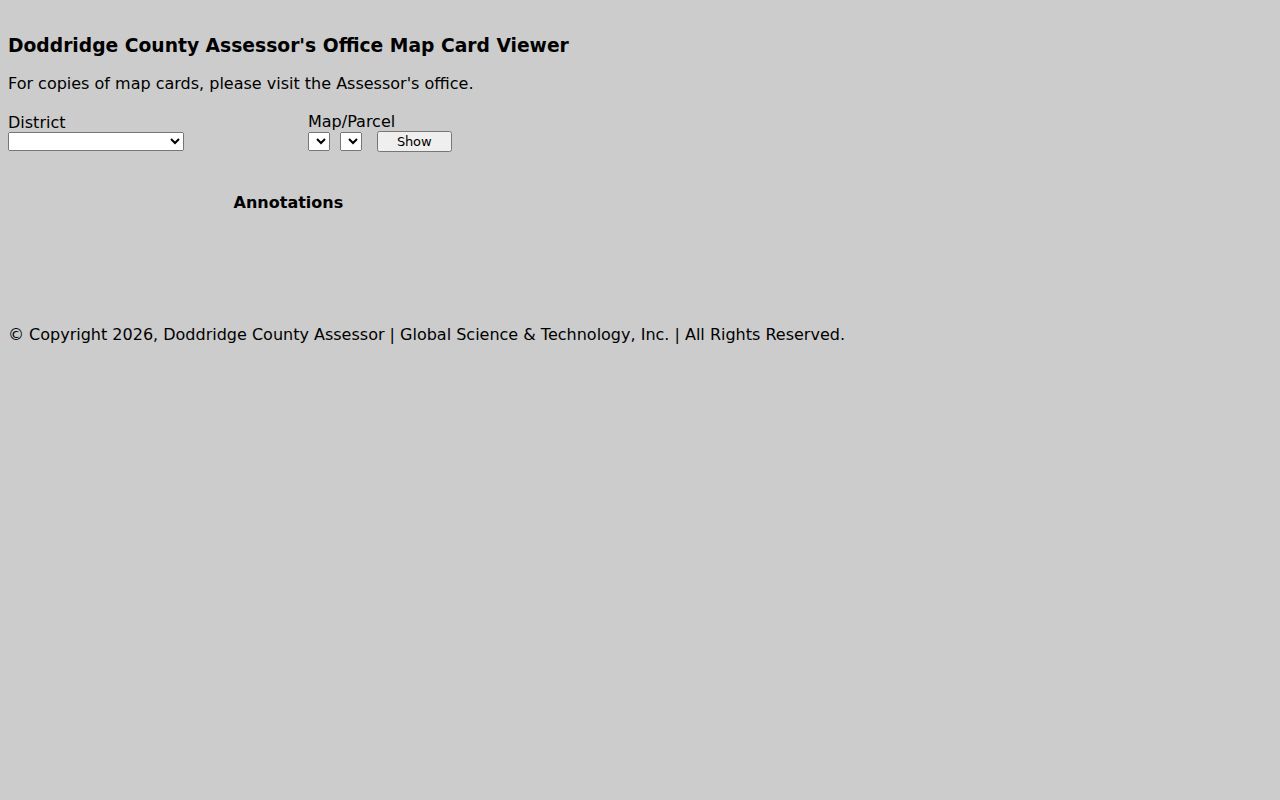
Pick the parcel with the selectors. Then confirm the owner against the recorded instrument rather than the search screen.
Doddridge Owner Data Refreshes Annually
Doddridge County assessment data refreshes on a yearly cycle. WV Property Assessment updates its property data when the new tax assessment is released. A fresh transfer may lag behind. No fixed delay is published. For a current-owner question, pair the assessment record with the latest deed in County Records Inquiry. The newest recorded conveyance is the direct evidence. The assessment roll may simply trail it. Ask the Assessor about any discrepancy or a correction request.
The county calendar explains the rhythm. The Assessor completes the books by January 30. Delivery to the Board of Equalization and Review follows by February 1, with values certified by March 3. The Board reviews during February and must adjourn by the month's last day. Those dates frame the annual release. They promise no date for a new owner's name. A transfer question still gets its answer from the recorded deed and the Assessor's current file. That file is the living record.
Confirming the Current Owner in Doddridge
The method is straightforward. Use the assessment record to pin down the parcel. Then verify the latest transfer in the deed index. Keep the focus on present vesting. The question is who received the most recent recorded interest, not how far back the chain runs.
County Records Inquiry offers a date range plus Starts With or Exact name matching. Name parts, book/page, and instrument number round out the search fields. The grantee on the newest deed is your transfer recipient. Match it against the assessment entry. No online cutoff or image terms are published for the land index. Call the Clerk for anything older or missing.
Log the recording date separately from the signing date. Save the book/page or instrument number. Search the grantor too if a result looks thin. The next instrument may carry a trust, estate, or company name. Local reference material cites $1.50 for the first paper page and $1 per additional page after two, so confirm current charges and certified-copy costs with the Clerk.
- Search WV Property Assessment with the address or owner clue and copy the parcel identifier.
- Use the owner name or known reference to search County Records Inquiry.
- Open the newest relevant deed and check its recording date and grantee.
- Compare that grantee with the assessment record and ask the Assessor about any update gap.
- Owner of record
- The party identified in an official property or deed record.
- Grantee
- The receiving party named in a recorded transfer.
- Vesting
- The way a deed states the interest is held; read the instrument itself.
- Registered agent
- A state-listed entity contact, not necessarily a landowner.
- Recording lag
- The gap between a recorded deed and an annual assessment update.
LLCs and Estates on a Current Owner Record
An owner of record can be an LLC, corporation, estate, trust, or fiduciary. Pull the exact grantee name from the deed first. Then take it to the West Virginia Secretary of State Business Entity Search. Advanced search filters by agent, officer, street, city, county, organization type, status, and date. An entity file may show principal or mailing addresses. It may also show registered agents, officers or members, and annual reports.
A registered agent is a contact in the business file. That role shows no ownership of the land. The deed still governs the transfer. The state search only clarifies a legal entity name. It cannot update the Assessor record or settle title. See the official WV advanced business search.
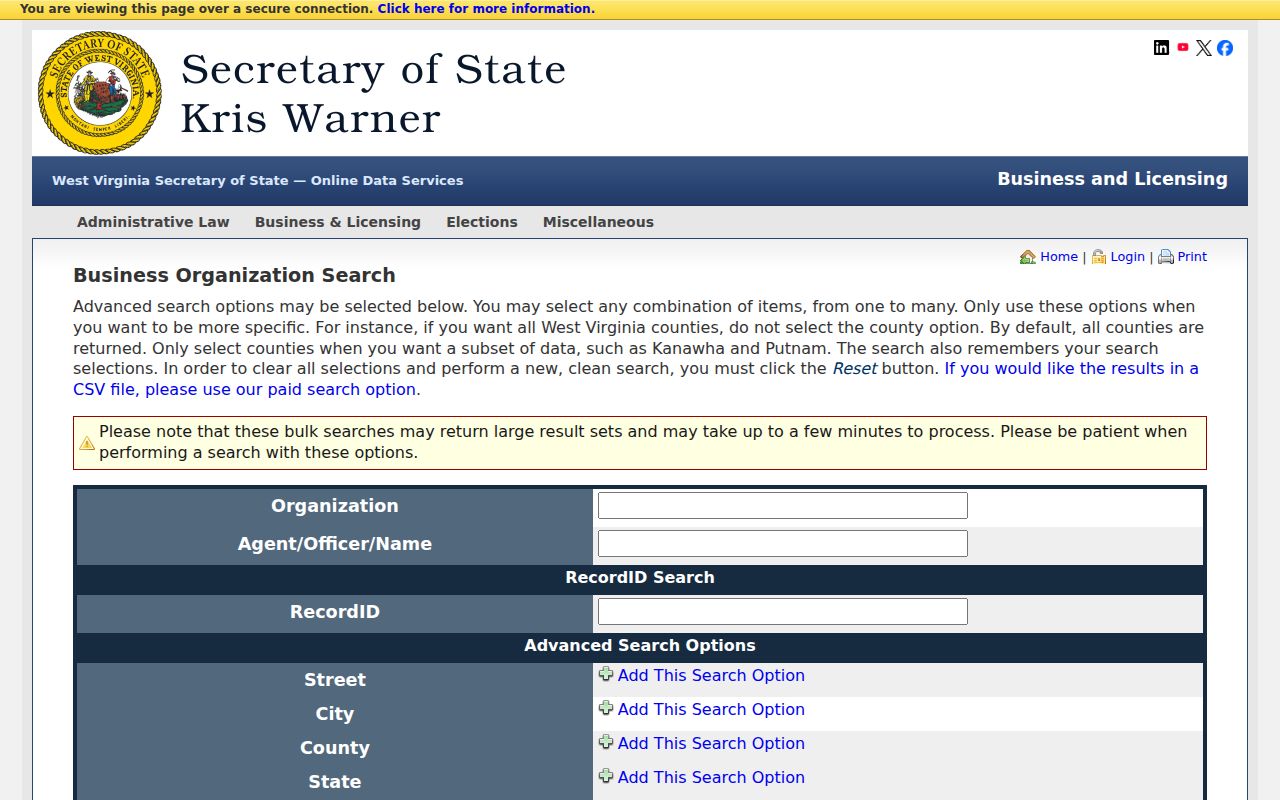
Confirm the land transfer itself in County Clerk records.
Mailing and Situs Do Different Jobs
A situs address and a mailing address do different work. The situs pinpoints the parcel's physical location in Doddridge County. The mailing address is where notices go, and it can sit somewhere else entirely. Records for West Union, Smithburg, and Center Point may carry ZIP or place labels that vary across state sources. Mail for the Center Point library is addressed through Salem. So match a current owner record by parcel number. Use the legal description rather than postal city alone.
The County Assessor's change-of-address form allows the owner to request a correction. Someone holding legal power of attorney can also submit the request. When a mailing line looks stale, ask the Assessor how to update it. Do not assume the property changed hands just because mail goes elsewhere.
Keep privacy in mind too. A public record can list a correspondence address without confirming where anyone actually lives. The state property source strips sensitive phone numbers and security-alarm information before release. How Address Confidentiality Program records appear in the county viewer is not spelled out. Use recorded mailing details only for a legitimate property matter. Avoid republishing a private address as a claim about an occupant.
Surface Owner and Mineral Owner May Differ
The statewide viewer shows surface parcels only. Mineral parcels are a different matter. A Doddridge County surface owner of record is not automatically the owner of every subsurface interest. Deeds, assignments, releases, and affidavits in the County Clerk's index can carry separate mineral-interest transfers. For a mineral question, search the relevant deed records and ask the Mined Minerals GIS Section about available state maps. The county publishes no separate mineral viewer. Keep the surface parcel and the subsurface rights distinct whenever you review title documents.
Reaching a Doddridge Property Owner
A public mailing address can open a lawful route to a Doddridge County property owner. Its presence in a record proves nothing about where the person lives. Limit contact to relevant property matters, and respect any safety or confidentiality protections. State property data redacts sensitive phone numbers and security-alarm information before release.
What if the papers disagree? The current assessment entry and the latest deed may name different parties. Note both dates. Then call the right office with the parcel number in hand. The County Clerk can explain how to locate a recorded instrument or request a copy. The Assessor can tell you whether the annual tax record reflects a transfer. It may instead need correction. Those answers are not interchangeable. The Clerk's filing documents a transfer. The Assessor maintains the tax roll. One more practical caution: the Clerk's listed suite differs across official pages. Confirm the counter location before you visit.
Lawful use. Use official records for ownership checks and property diligence. Never use an owner's name or address to stalk, threaten, harass, or harm that person.