
Doddridge County Deed Records and Instruments
Land records in Doddridge County cover far more than transfer deeds. The Clerk's index includes Deeds, Deeds of Trust, Liens, Releases, Assignments, Agreements, Affidavits, and Plat Maps. It also covers Cemetery Deeds, Church Trustees, Trustee Reports of Sale for foreclosures, and Military Discharges under restricted access. Each category tells you something different about land. Some show how an interest in land moved. Others show what else was filed against the property. The Clerk records the documents. The County Records Inquiry is the party-and-instrument route for locating them in the deed records.
| Deed Type | What It Does | Common Use |
|---|---|---|
| Deed | Recorded land instrument that documents a transfer. | Trace a grantee to the prior grantor. |
| Deed of Trust | Separate recorded category connected with a secured property interest. | Search with releases and assignments. |
| Trustee Report of Sale | County-listed foreclosure filing category. | Check for a reported trustee sale. |
| Release or Assignment | Recorded follow-up instrument affecting an earlier filing. | Pair with the related instrument number. |
| Plat Map | Recorded map category used with lot or parcel descriptions. | Compare the deed reference with the Assessor map. |
A deed and a deed of trust serve different purposes. The deed records a transfer of title. A deed of trust, lien, release, or assignment falls into a separate category. The Clerk's index sorts these instruments that way. The Clerk publishes no confirmed cutoff for online deed images and no fixed retrieval price. Treat the index as a finding aid first. Then ask the Clerk which copy method fits the instrument you located. The Doddridge land-record page shows the local categories and the Clerk contact route.
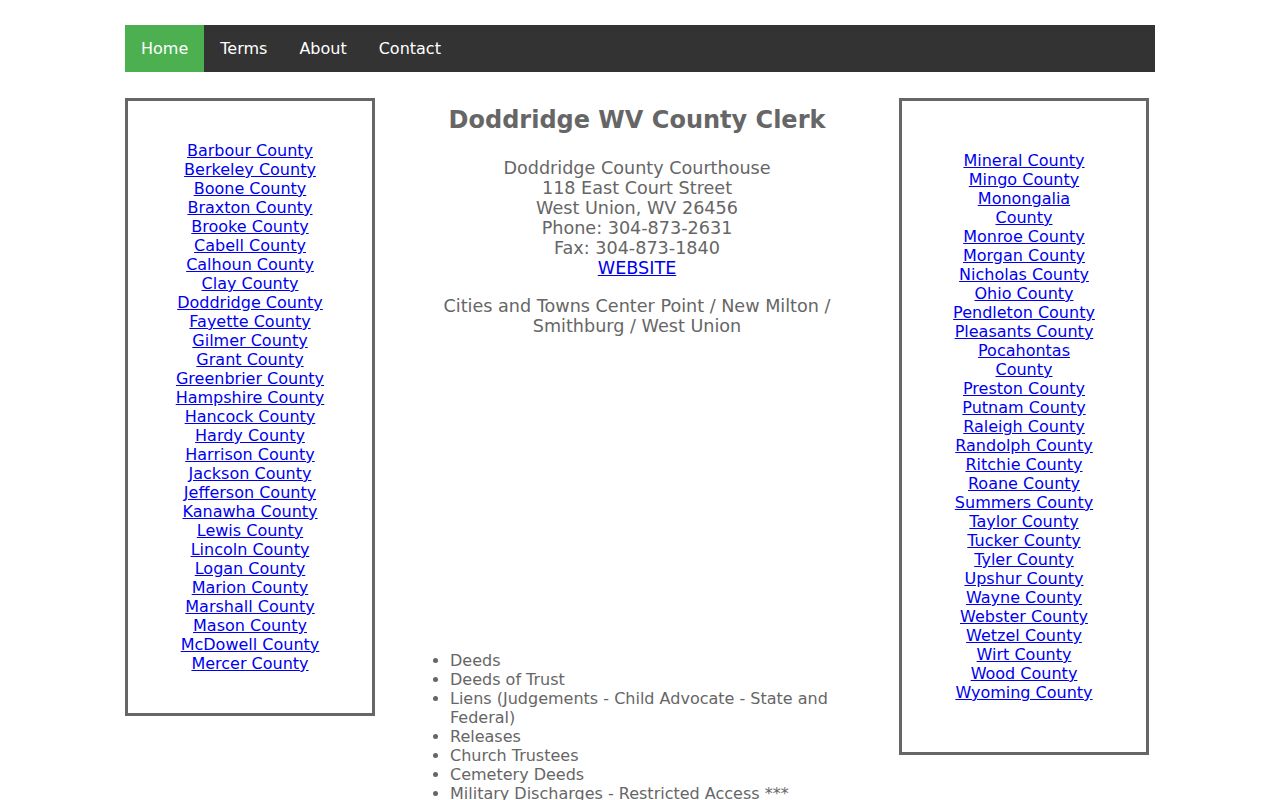
The category list helps you separate the transfer deed from liens, plats, and foreclosure filings that may touch the same parcel.
Doddridge County Inquiry Search Fields
The official description of County Records Inquiry offers more than a surname box. Date limits help when you know the transfer period. Search names in both party roles. The same person can appear as grantor or grantee. A book and page citation pulls a record more directly than a name query. So does an instrument number. The default date of January 1, 1700 is not evidence of digitized coverage. The Clerk's public land-record page names no online start year for the deed records.
| Field or control | How it works | When it helps |
|---|---|---|
| From / Thru | Date range fields | Narrow a known filing window. |
| Name Filter | Starts With or Exact | Test spelling and party name. |
| Last / First / Middle | Name components | Search a grantor, grantee, estate, or fiduciary. |
| Book / Page | Recorded reference | Open a later deed's cited source. |
| Instrument # | Identifier, up to 20 characters observed | Retrieve a known filing. |
The portal description also names Search, Selections, Advanced, and View modes, plus sorting and reset controls and file export choices. Image availability and subscription status are not stated. Remember that a search result is not a certified copy.
How Doddridge Grantor and Grantee Names Link
Every Doddridge County deed pairs two parties. The grantor conveys the interest. The grantee receives it. In a chain search, the grantee on one deed usually becomes the grantor on the next, so start with the newest instrument you can confirm and work backward through each named prior owner. Search in both directions, because one party's deed may sit under a name form or role you never expected. Keep every book, page, or instrument reference together with the transfer date and deed type. A chain is only a sequence of filed records. It does not guarantee that every interest has surfaced. A trust, estate, company, or fiduciary may appear under a formal name rather than a person's everyday name. When an instrument cites a prior deed, use that citation as a second path back into the index.
Doddridge County's 1845 Boundary and Older Deeds
Doddridge County was organized in 1845 from parts of Harrison, Lewis, Ritchie, and Tyler counties. Land history before that year may sit in one of those predecessor counties. The earliest Doddridge deed book remains an open question. So does any courthouse loss. Any imaging cutoff is unresolved too. Ask the Clerk before assigning a year to the portal's reach. The online index may stop returning useful matches. The County Clerk can then point you to deed books, older volumes, microfilm, and in-person search options. A local library or the State Archives may help locate an older reference. The property chain itself must still tie back to recorded instruments. The Clerk's category list is an inventory, not a date-range guide.
Foreclosure Reports and Court Files Differ
The County Clerk's land-record categories include Trustee Reports of Sale. Recorded deeds and redemption notices tied to delinquent property sit there too. The civil lawsuit behind a foreclosure, partition, or quiet-title dispute lives elsewhere. That case file is a court record held through the Circuit Clerk. A recorded report and a case file answer related but distinct questions. Doddridge sits in the Third Judicial Circuit. WVPASS is the statewide access route for eligible Circuit Court civil and criminal files. Local material describes public coverage from July 1, 1999 onward. Public document downloads run 25 cents per page. Certified copies and older or restricted files go through the Circuit Clerk. The court result can supply a case number and docket context. The County Clerk records the land instrument. See the Doddridge court contact page for the Circuit and Magistrate offices.
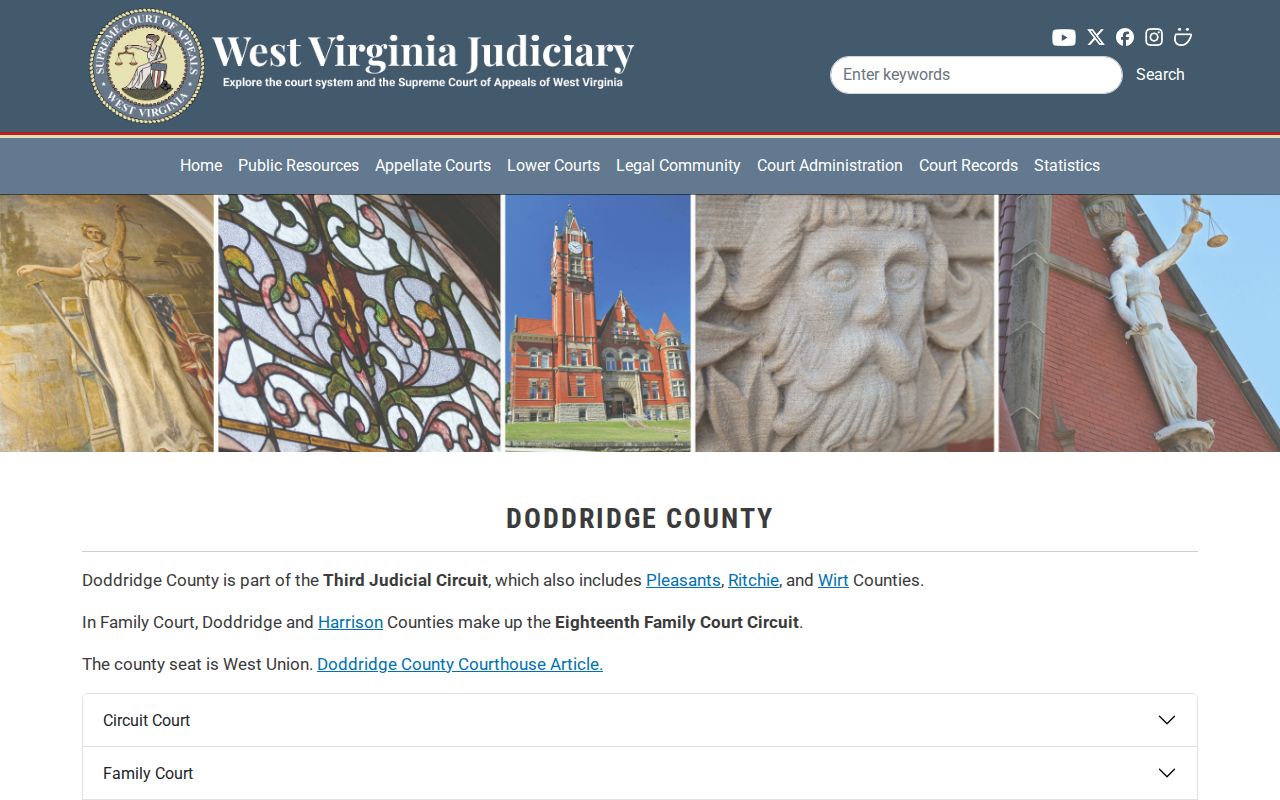
Head to the courts for lawsuit papers and to the Doddridge County Clerk for the deed or trustee report.
Recorded Plats and Doddridge Deed Descriptions
Plats sit in the County Clerk's records right alongside deeds, agreements, and affidavits. A deed description may rely on metes and bounds. It may use a lot and block instead. Some use both. When an instrument points to a recorded map, search the plat category, then compare the lot reference against the current Assessor map. The state GIS clearinghouse publishes surface tax-map files anyone can download, but a downloaded map remains a reference source rather than final proof.
The legal description and the recording reference tie a deed to its map. Treat the GIS outline as a general guide, not as evidence that deeded acreage or boundary lines are exact. Ask the Assessor about the map submission where a parcel has changed shape. A survey settles boundary questions. The county publishes no named subdivision plats and no local subdivision index.
Using the Doddridge Grantor-Grantee Index
A deed chain runs from one instrument to the next. A single owner-name result will not carry the whole story. Doddridge County's County Records Inquiry offers described search fields. A name, a time range, or a book/page or instrument citation can each narrow the field. A book and page point to a spot in a volume. An instrument number identifies the filing itself. Record both references for later deed records searches. Copy party names exactly as the deed shows them.
- Find the latest recorded transfer and note the grantee and its reference number.
- Read the grantor name from that deed, then search that name as a grantee.
- Repeat the transfer-to-prior-owner step and preserve each date and citation.
- When the online result is incomplete, ask about older deed books or microfilm; the cutoff is unverified.
- Grantor
- The party named as conveying an interest in an instrument.
- Grantee
- The party named as receiving the conveyed interest.
- Chain of title
- The ordered trail of recorded transfers tied to a parcel.
- Book and page
- A volume and page reference to a recorded document.
- Instrument number
- A filing identifier used to locate a record in the inquiry.
Getting a Copy from the Doddridge County Clerk
Start in County Records Inquiry and note the party names, instrument number, book/page, and recording date for the instrument you need. Then call the County Clerk at 304-873-2631 and ask whether an image is available online, by mail, or at the counter. The portal's image terms are unclear. No deed-copy order form or processing time is published.
Local court-access materials list a County Clerk paper-copy rate of $1.50 for the first page and $1 for each additional page after two. They also cite $30 to record a deed and $40 for a trustee report of sale. Treat these figures as references only. The Clerk confirms the current charge and accepted payment method.
Ask the office to distinguish a copy of an existing document from the charge to record a new one. A paper-copy price does not guarantee the same amount buys a certified copy, an electronic image, or a full multi-instrument chain. Give the Clerk the recording date, parties, instrument type, and any book/page or instrument number so staff can locate the request. With only a parcel label, use the Assessor first to connect it to a party or legal description. No current mail-order form, turnaround time, or payment method is published, so verify each detail before submitting.
Note: One listing shows Suite 201 while a contact block shows Suite 115, so call the Clerk before visiting.
Some categories carry their own access conditions. The County Clerk's list marks military discharges as restricted access, so a public-records search is not permission to retrieve a protected filing. The online description does not promise a visible image for every deed or older book. Give the office the exact document reference and ask what portion is open, what copy format exists, and whether certification costs extra. Keep recording fees separate from copy fees when estimating a property-history request.
Recorded, not guaranteed. A deed index points to filed instruments, not a title opinion. It may omit unrecorded interests or older records that are not indexed online.